
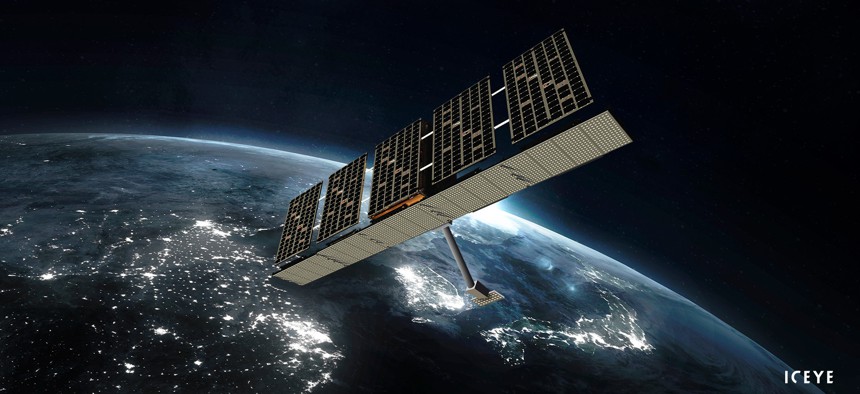
ICEYE Generation 3 Satellite ICEYE
ICEYE Growing in Popularity as Europe Seeks to Improve Space-Based Capability
A growing number of countries are investing in sovereign SAR satellite constellations amid a broader push for strategic autonomy in space.

Europeans are currently moving to improve their space-based capabilities. ICEYE, in particular, is becoming popular amongst European Nations. Poland, Portugal, Greece, the Netherlands, Sweden, Germany, and Finland have all made agreements with the Finnish manufacturer to provide Synthetic Aperture Radar (SAR) satellite capability for their respective armed forces.
Despite the fact that many European nations have some amount of military satellite capability, the United States provides Europe with early missile warning and a large amount of intelligence from earth observation satellites. France (CSO (Composante Spatiale Optique)), Germany (SARah), Spain (PAZ) and Italy (COSMO-SkyMed Second Generation (CSG)) have remote sensing capabilities. The United States serves as the primary backbone for European military space operations, though 2026 has seen a significant shift toward "strategic autonomy" as European nations react to a more "America First" posture from Washington.
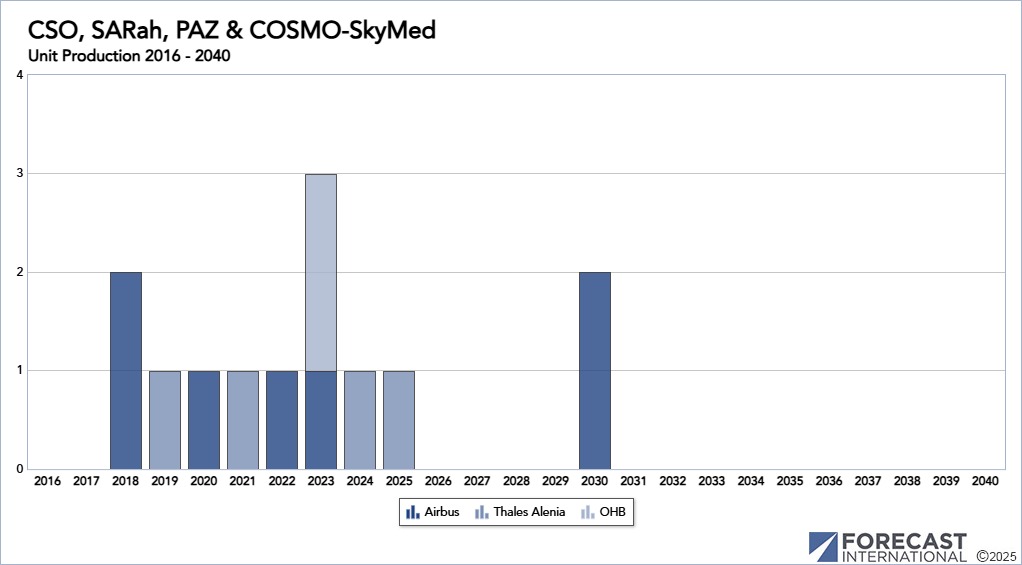
Note: Estimated build years, includes PAZ-2 (estimated 2030)
There has been a flurry of arrangements with ICEYE in particular. While traditional players like Airbus and Thales Alenia generally build massive satellites that are destined for GEO (Geostationary Orbit), ICEYE builds smaller satellites that can be deployed in months to LEO (Low Earth Orbit).
Poland: Poland has been expanding its space capabilities in a few ways. Airbus was contracted in 2023 to provide two optical satellites based on Pléiades Neo. The country took a further step in securing SAR capability from ICEYE. In May 2025, Poland ordered three SAR satellites with an option for a further three from the company. These spacecraft launched in November 2025.
Sweden: In a similar vein to Poland, Sweden is currently investing in ten satellites, optical and SAR, with an unknown breakdown at this time. ICEYE will produce the SAR sats while Planet will make the optical component.
Finland: Although a number of satellites were not initially listed, it was reported that three satellites were purchased by Finland from ICEYE. Two of these satellites have already launched, with the opportunity for further options.
Germany: Perhaps the most ambitious ICEYE-related project was the formation of the Rheinmetall ICEYE joint venture. This joint venture will produce the SPOCK-1 (SAR-Spacesystem for Persistent Operational traCKing Stufe 1) constellation with 40 satellites planned. Full deployment of the system will likely be in the 2027/28 timeframe. With Stufe 1 in the name (Level 1), it is highly likely there will be follow-on "Stufen" in the future.
The Netherlands: The Netherlands ordered four SAR satellites from ICEYE to provide Intelligence Surveillance and Reconnaissance (ISR) capabilities to the Royal Netherlands Air and Space Force. One satellite has launched with the remaining three launching in the 2026/27 timeframe.
Greece: Similar to Germany, there is now an ICEYE production line in Greece. The country originally ordered two satellites, and with local production, more satellites will likely be ordered in the future. Both of these satellites have launched.
Portugal: Portugal ordered one ICEYE SAR satellite in June 2025 and a second in December 2025. The first satellite was launched in November 2025. These satellites will be utilized for environmental monitoring and disaster relief. These two ICEYE satellites are the "radar backbone" of the Atlantic Constellation, a joint project between Portugal and Spain.
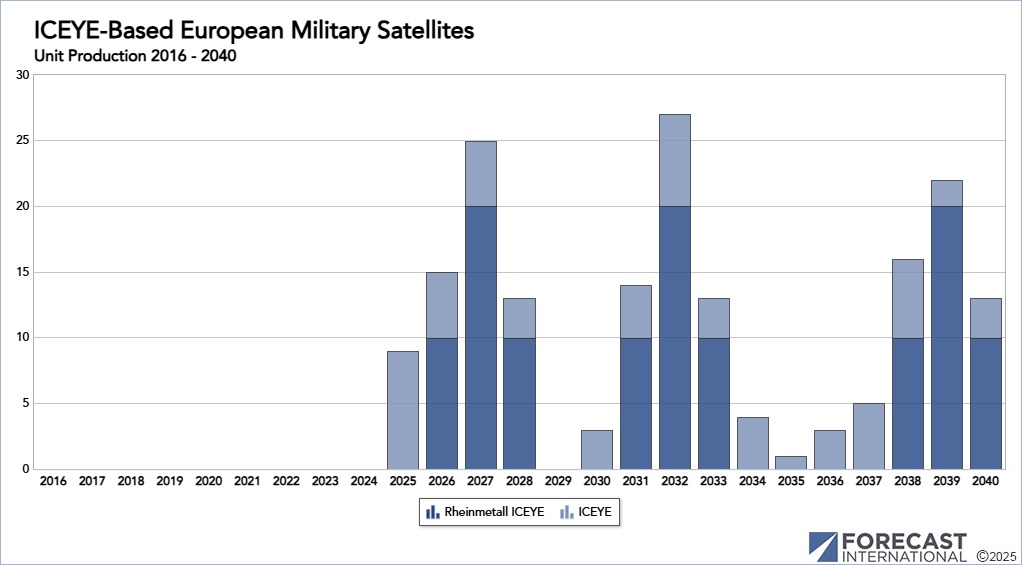
Note: ICEYE orders with likely future follow-on orders to maintain capability
The common thread with these European countries is the move toward sovereign space tasking. By 2026, these nations have realized that having a seat at the table is no longer enough; they want operational sovereignty. By owning their own microsatellites, these smaller European powers can now monitor their specific borders without needing to request data from Washington.